 Body Balance
Nutrition & Recovery
Everyday Nutrients and Foods for Men Over 50
Balanced meals can provide a wide range of nutrients through ordinary foods. This guide looks at vitamin D, magnesium and zinc alongside hydration, sleep and simple recovery habits.
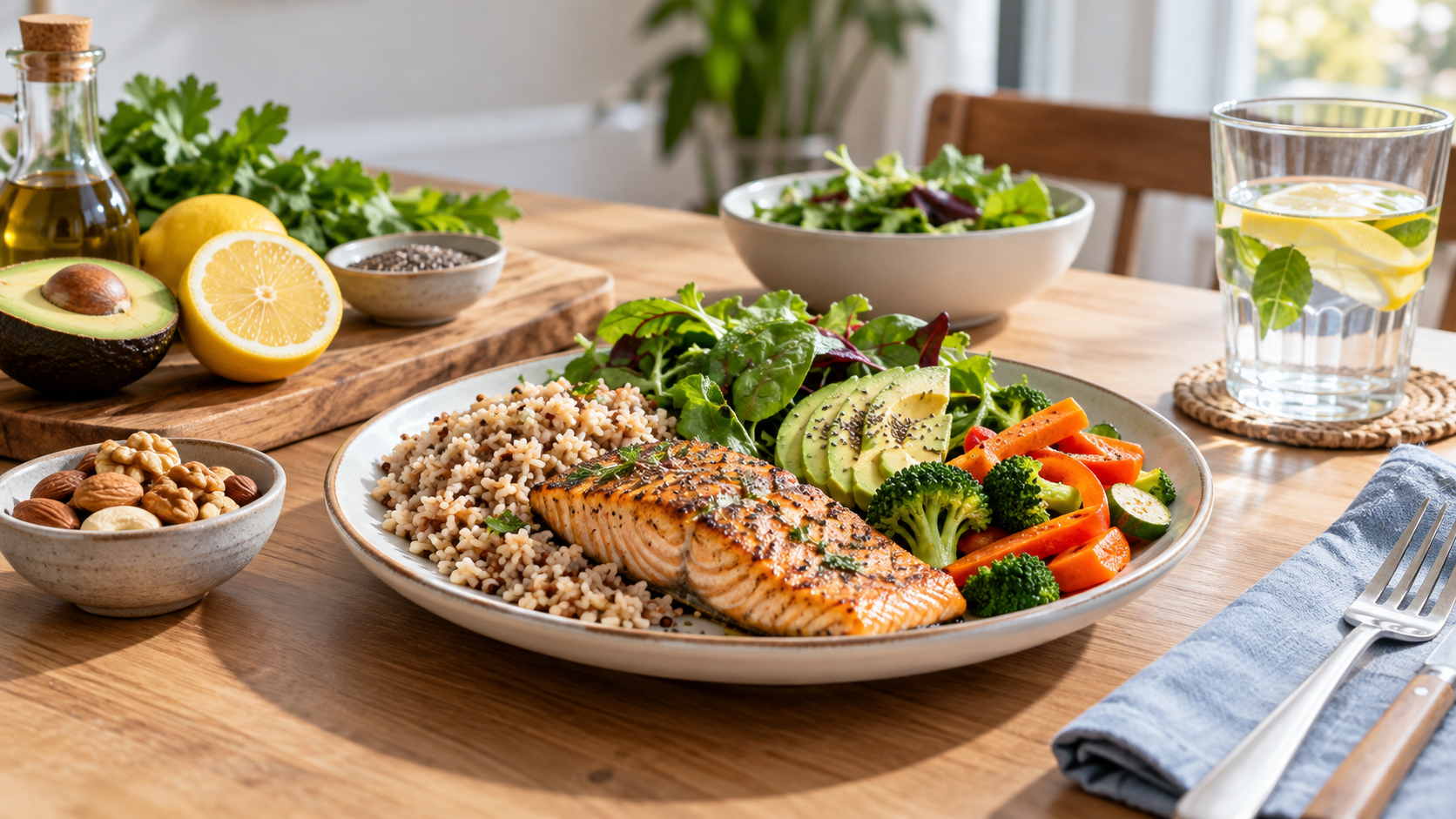
Start with variety
No single food needs to provide every nutrient in the diet. A practical approach is to combine protein foods, vegetables, fruit, whole grains, legumes, nuts or seeds across the week.
Variety also makes meals easier to adjust to personal preferences and the foods that are readily available.
Vitamin D food sources
Food sources can include fatty fish, egg yolks and fortified foods. These foods can be included alongside vegetables, grains and other ordinary foods in a varied diet.
Magnesium food sources
Leafy greens, nuts, seeds, beans and whole grains are everyday examples. They can be added through mixed vegetable dishes, bean-based meals, oats, brown rice or a small portion of nuts or seeds.
Zinc food sources
Meat, seafood, beans, nuts and seeds can contribute zinc. Across a week, different meals may provide different sources without requiring the same food every day.
Hydration
Water needs can vary with activity, temperature and diet. Keeping water available during the day can make hydration easier to remember.
Sleep habits
A regular bedtime, a comfortable room and a quieter final part of the evening can create a more predictable schedule. Keep the timing as consistent as practical.
Recovery days
Lighter movement days can sit between more structured sessions. Gentle walking, mobility or rest can all be reasonable parts of a weekly plan depending on how the week feels.
Turning nutrition ideas into ordinary meals
A practical food routine starts with meals you already enjoy. Instead of rebuilding the entire menu, add variety gradually. One week might include fish twice, beans in a lunch dish, leafy greens with dinner and a small portion of nuts or seeds as part of a snack. The next week can use different combinations.
Meal structure can also make choices easier. A plate that includes a protein source, vegetables, a carbohydrate such as rice or whole grains, and water provides a simple framework that can be adapted to local foods and preferences. The examples in this guide are not a fixed menu.
Sleep and hydration fit naturally alongside food choices because they are part of the same daily rhythm. Keeping water visible, eating at broadly consistent times and creating a calmer evening routine can reduce the number of decisions you need to make at the end of a long day.
Example routine
Reviewing the routine after a few weeks
After several weeks, look at whether the routine still feels easy to fit into your day. Review which parts you remember without prompting, which parts you tend to skip, and whether the timing still works with your schedule. If a step regularly feels inconvenient, simplify it rather than abandoning the whole routine.
Progress does not have to mean adding more time. You might keep the same duration while moving with better control, preparing meals more consistently, or using lighter days more deliberately. Keep adjustments small so the routine remains manageable.
Keep the routine comfortable
Use a pace that lets you breathe normally and stay in control of each movement. If something feels unsuitable for your current ability, shorten the range, reduce the duration or choose a simpler alternative.